
The Mamdani Social Housing Plan presents an ambitious strategy to address the city’s housing challenges through large-scale expansion and preservation of affordable homes. The proposal aims to create 200,000 new affordable housing units while preserving another 200,000 existing homes. If implemented successfully, the Mamdani Social Housing Plan would become one of the most significant housing initiatives undertaken in the city in recent decades. It could improve affordability and housing stability for hundreds of thousands of residents.
However, the proposal has also attracted criticism. Opponents question its assumptions, pricing structure, and reliance on private developers rather than a fully public construction model.
Mamdani Social Housing Plan Cost Shift
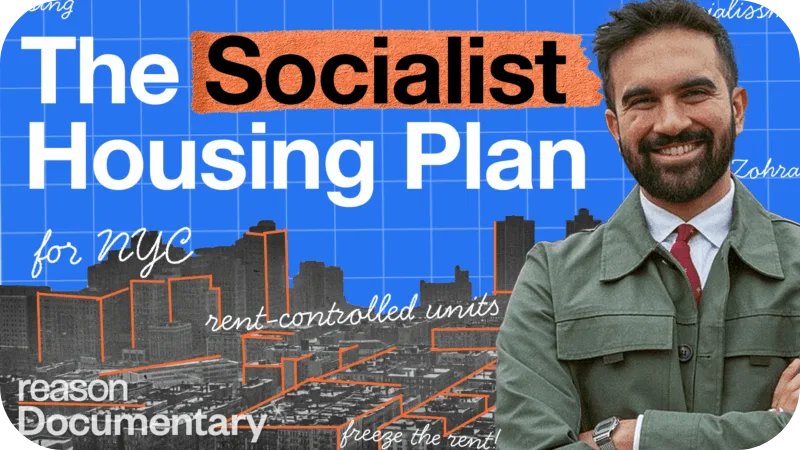
The revised cost estimate marks one of the most significant changes in the proposal. During the campaign phase, planners projected the cost at approximately $100 billion. In the updated version, the direct public commitment falls to roughly $22 billion.
This reduction does not necessarily mean total housing spending will decrease. Instead, the strategy spreads costs over a longer period. It also reframes the budget as a five-year public investment within a broader ten-year housing framework. As a result, the headline figure appears smaller even though the housing goals remain largely unchanged.
Critics argue that the original estimate already looked low for producing 200,000 union-built affordable homes. They also believe the updated figure relies more on optimistic assumptions than on actual construction costs.
Private Developers in the Mamdani Social Housing Plan
A major change in the updated strategy is its greater reliance on private developers. The plan encourages private investment to create mixed-income housing communities. Instead of financing large public housing projects through substantial municipal borrowing, it seeks partnerships with private builders.
This model depends on market-rate units helping support affordable housing. Developers use profits from higher-rent apartments to subsidize below-market units. Supporters believe this approach reduces the direct burden on taxpayers. Critics argue that it increases dependence on market performance and private-sector incentives.
The strategy also builds on zoning reforms introduced by previous city and state administrations. These changes make construction easier in selected areas and encourage additional housing development.
Policy Backbone of the Mamdani Social Housing Plan
The Construction Justice Act serves as a major structural influence on housing policy. The law establishes wage and benefit requirements for workers involved in city-assisted housing developments. These standards significantly increase labor costs because developers must compensate workers fairly.
However, the law does not apply equally to all projects. Smaller developments and office-conversion projects below certain thresholds do not face the same wage obligations. This creates a two-tier system. Large publicly assisted developments carry higher labor costs, while smaller or privately financed projects enjoy greater flexibility.
Supporters view the policy as a victory for labor rights. Critics worry that it could discourage large-scale affordable housing construction or push developers toward less-regulated project categories.
Mamdani Social Housing Plan Supply Strategy
The Mamdani Social Housing Plan largely relies on a supply-side response to affordability concerns. Its central argument is straightforward: decades of underbuilding created an imbalance between housing demand and supply. Increasing the total housing stock should therefore ease price pressure across income levels.
The strategy identifies underbuilding as a major cause of gentrification, displacement, and rising rents. Policymakers expect market pressures to ease over time as housing supply grows across different income brackets.
To accomplish this goal, the plan combines several development tools and policy measures.
Mamdani Social Housing Plan Rezoning Push
Aggressive rezoning in high-demand, transit-accessible neighborhoods forms a key part of the strategy. Sections of Manhattan and Brooklyn receive particular attention. Policymakers see these areas as opportunities for higher residential density.
The goal is to open land that has historically resisted development. By allowing additional housing construction, the city hopes to create more units in neighborhoods where demand remains strongest.
Conversions Growth Strategy

Office-to-residential conversions represent another major pillar of the housing strategy. Several large-scale projects have already demonstrated that commercial buildings can become residential properties without extensive public subsidies.
Developers often complete these projects through streamlined approval processes. Most units enter the market at standard prices, although developers typically reserve a portion as affordable housing.
Public Land Development Under the Mamdani Social Housing Plan
The proposal also emphasizes redevelopment of publicly controlled land. Potential sites include transit-adjacent properties, institutional campuses, and underutilized public parcels.
Examples include rail yards, hospital campuses, and other city- or state-owned properties. These locations offer rare opportunities to build large housing communities from the ground up. However, many projects require extensive coordination and long development timelines.
Public Housing Mix in the Mamdani Social Housing Plan
Another component focuses on mixed-income redevelopment within public housing campuses. This approach introduces private-sector participation into traditionally subsidized housing developments.
Previous administrations launched similar initiatives, although many encountered legal and political obstacles. The current proposal continues this approach. It relies on private firms to modernize, maintain, and manage portions of public housing stock.
Modular Housing and ADUs
Innovation in construction methods also plays an important role. Factory-built modular accessory dwelling units (ADUs) offer a faster and potentially less expensive way to increase housing supply.
Manufacturers build these units off-site and install them quickly on residential properties. This process reduces construction time and limits disruption. The city also provides financial assistance and technical guidance to homeowners interested in adding ADUs.
The strategy also supports broader legalization of basement apartments, particularly in outer-borough neighborhoods. Officials believe these units could add meaningful housing capacity.
Preservation Focus of the Mamdani Social Housing Plan
Beyond new construction, the strategy places strong emphasis on preserving existing affordable homes. Expanded repair programs and support for low-income homeowners form a major part of this effort.
The proposal includes mortgage assistance programs, home-repair initiatives, and targeted support for distressed properties. Critics, however, argue that preservation efforts remain uneven. They point especially to challenges facing rent-stabilized housing.
Structural Gaps in the Mamdani Social Housing Plan
The scale of the proposal creates concerns about internal contradictions. One major challenge involves balancing affordable housing goals with labor and regulatory requirements that increase development costs.
Wage standards, zoning restrictions, and legal procedures can raise costs and reduce project profitability. Policymakers introduced many of these rules to promote fairness and quality. Nevertheless, they may limit housing production in the short and medium term.
As a result, city leaders face a difficult balancing act. They must increase housing supply while maintaining support from labor unions and local communities.
Rent-Stabilized Housing Pressure
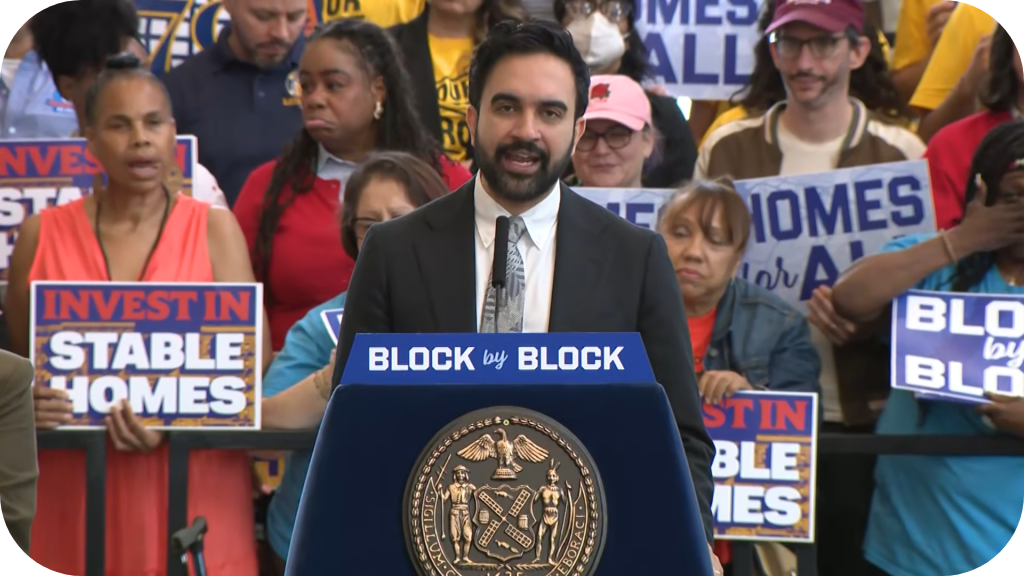
Rent-stabilized housing presents one of the most difficult challenges. Many properties face financial strain because rent restrictions limit revenue growth. In some cases, owners cannot collect enough rent to cover maintenance and repair expenses.
As a result, some units remain vacant or fall into poor condition. The strategy addresses housing quality concerns but focuses more heavily on subsidized affordable housing than on privately owned regulated properties.
For small and medium-sized landlords, the conflict between policy goals and economic realities remains especially difficult.
Enforcement Approach in the Mamdani Social Housing Plan
The proposal also calls for stricter action against owners who neglect buildings or repeatedly violate housing regulations. Officials plan to increase oversight of properties with ongoing compliance issues.
In rare cases, authorities may transfer troubled buildings to nonprofit organizations or preservation-focused housing groups. This could occur when owners fail to maintain properties adequately.
Supporters believe stronger enforcement will protect tenants and improve living conditions. Critics argue that it could discourage investment and worsen financial pressures on struggling properties.
Conclusion
The Mamdani Social Housing Plan combines market-driven expansion, regulatory intervention, and public-sector coordination. Rather than relying on a single solution, it attempts to blend several approaches to address housing shortages.
Its success will depend heavily on private developer participation, zoning flexibility, and the ability to balance affordability goals with economic realities. While the proposal outlines an ambitious vision, implementation, market response, and long-term political support will determine its ultimate effectiveness.
In practice, the Mamdani Social Housing Plan functions less as a traditional public housing program and more as a sophisticated partnership model. It seeks to reconcile competing interests within one of the world’s most expensive housing markets while expanding access to affordable homes on a historic scale.