
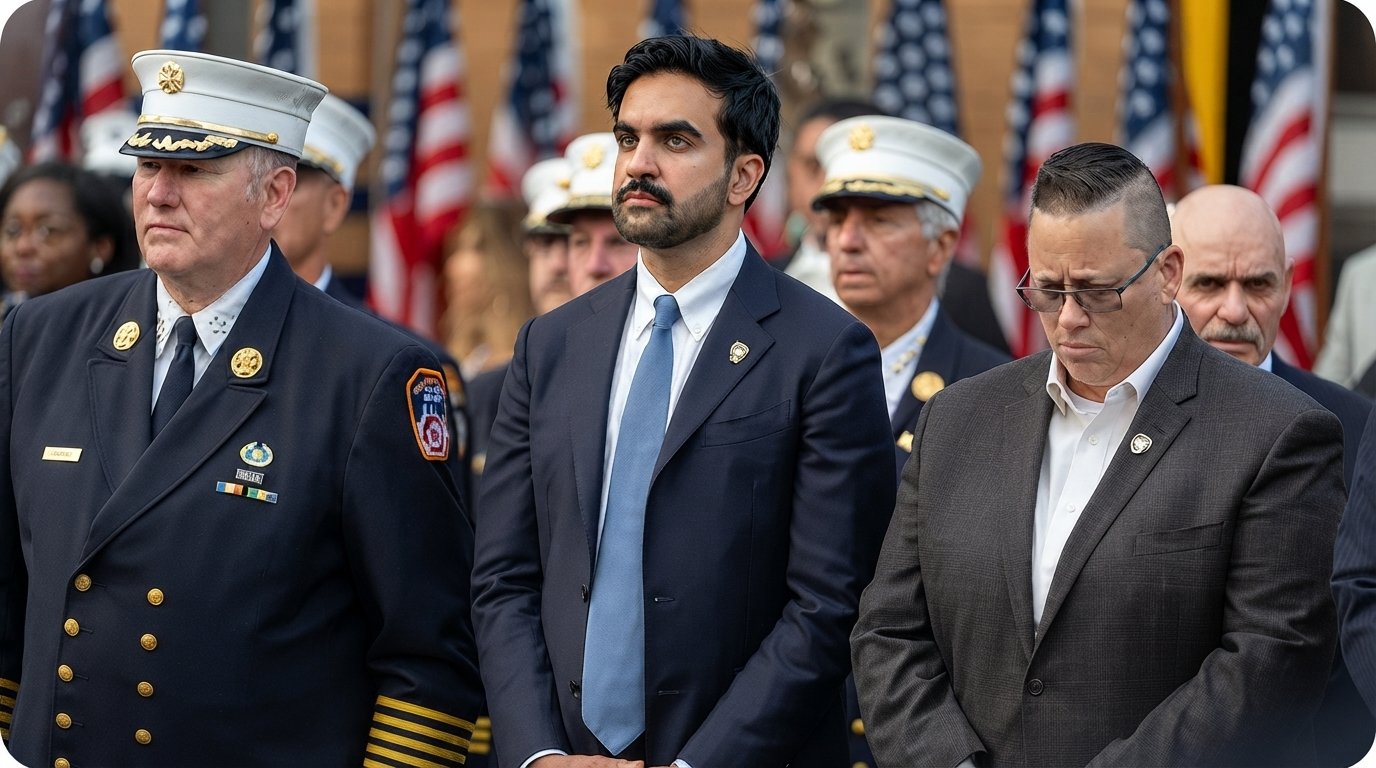
New York City Mayor Zohran Mamdani faced intense political pressure around the 25th anniversary of the September 11 attacks. The backlash extended beyond the traditional remembrance of the victims. It also placed the mayor at the center of a wider political controversy.
Despite calls from prominent political figures to stay away, Mamdani attended the Ground Zero commemoration. He also joined other memorial services on September 11, 2026. Rather than making the occasion about himself, he focused on honoring the victims, survivors, first responders, and families affected by the attacks.
The events surrounding Mamdani 9/11 also reignited a wider debate about Islamophobia in America. More than two decades after the attacks, the discussion highlighted continuing tensions around Muslim identity and September 11 remembrance.
Mamdani 9/11 Backlash and Political Pressure
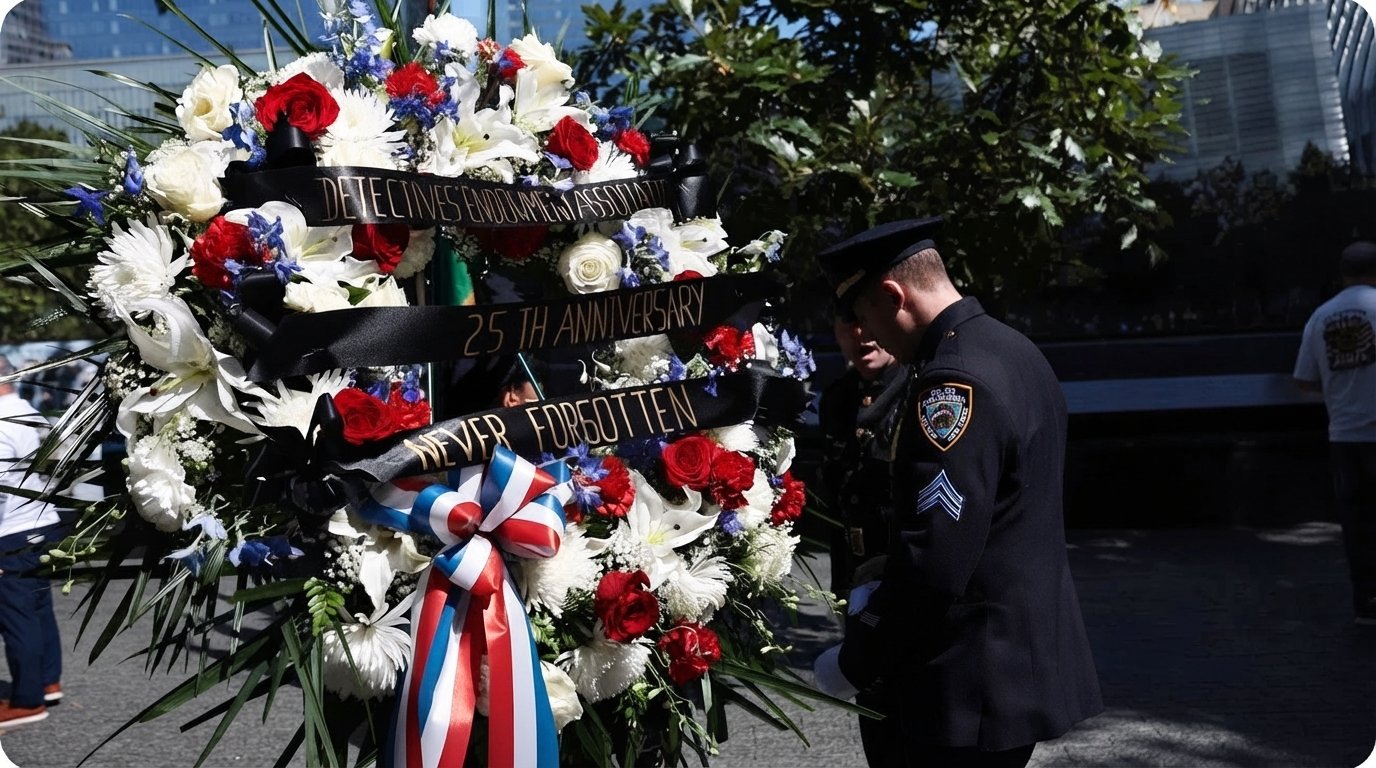
In the days before the Mamdani 9/11 anniversary, several prominent political figures questioned whether the mayor should attend the official ceremonies.
Former New York City Mayor Rudy Giuliani, former New York Governor George Pataki, and gubernatorial candidate Bruce Blakeman were among those who urged Mamdani to stay away from the commemoration.
Blakeman went as far as describing Mamdani as “un-American.” Senator Tommy Tuberville also shared an image comparing Mamdani’s Ramadan iftar dinner with imagery of the burning World Trade Center towers.
A Change.org petition attracted more than 96,000 signatures. Supporters argued that Mamdani’s presence could distract from the victims and their families.
The controversy placed an unusual political spotlight on one of New York’s most solemn annual memorial events. It also made Mamdani’s attendance a major subject of public discussion.
Mamdani Attends the 9/11 Memorial Ceremony
Despite the criticism, Zohran Mamdani 9/11 participation went ahead as planned.
Mamdani attended the Ground Zero ceremony. He remained through the reading of the victims’ names. His decision reflected his role as mayor and his responsibility to stand with New Yorkers during a significant moment of remembrance.
His approach was notably restrained.
Rather than using the anniversary for political statements, Mamdani declined interview requests. He also limited his public comments. His focus remained on people directly affected by September 11.
That approach kept attention on the purpose of the event. The ceremony was about remembering those who lost their lives. It also recognized those who continue to live with the consequences of the attacks.
Mamdani September 11 Ceremony and Victim-Centered Approach
Mamdani’s conduct during the Mamdani 9/11 ceremony drew particular attention. His attendance had already attracted significant political scrutiny.
The mayor visited New York City firehouses but kept the visits brief. He reportedly spent less than 30 minutes at each location. Instead of giving lengthy speeches, he focused on listening and paying respect.
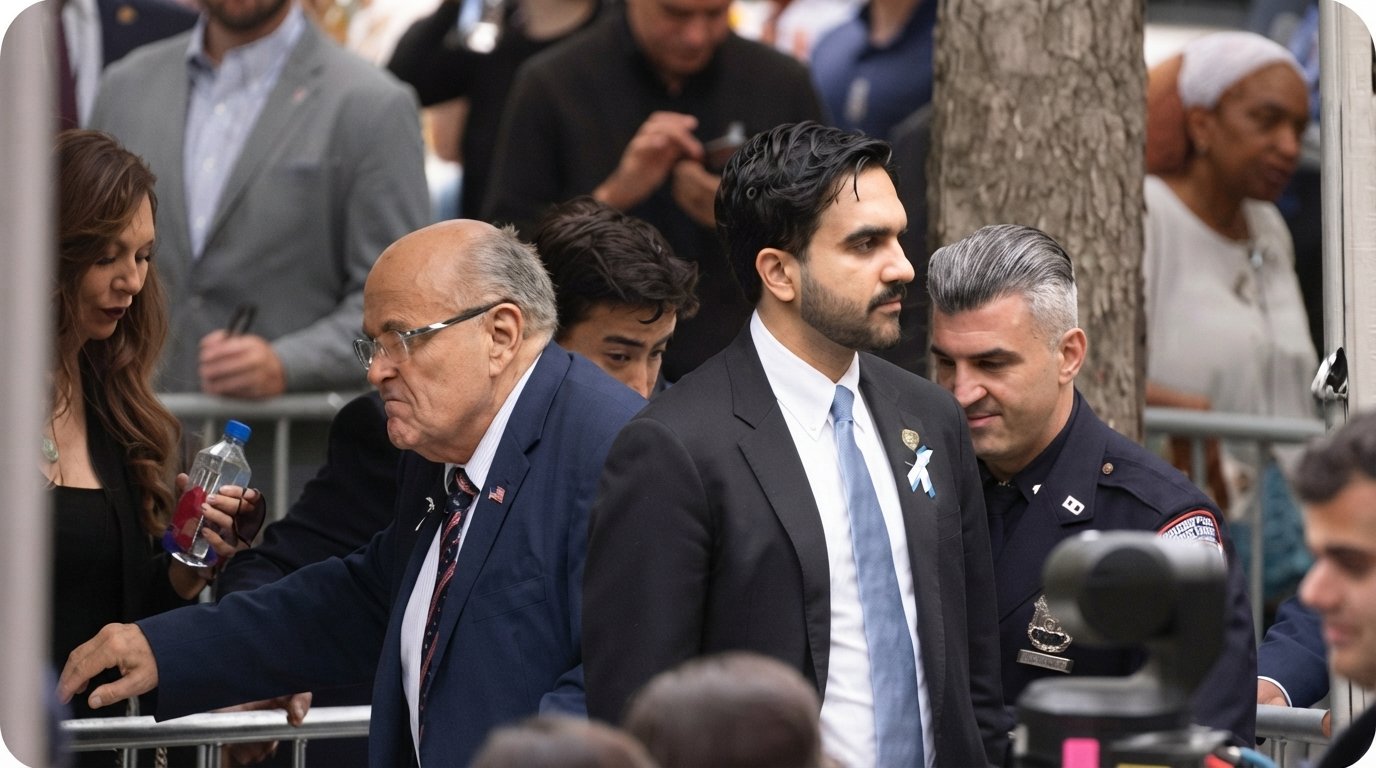
At Ground Zero, Mamdani also exchanged a brief handshake and pleasantries with Giuliani.
The interaction was short. Still, it showed an effort to preserve the solemn atmosphere of the occasion. This came despite the political disagreements between the two figures.
Mamdani also attended an interfaith service at St. Nicholas Greek Orthodox Church. The visit further emphasized the commemorative and inclusive nature of his participation.
Mamdani 9/11 and the Islamophobia Debate
The controversy surrounding Mamdani and 9/11 soon became part of a larger national conversation about Islamophobia.
Mamdani is the first Muslim mayor of New York City. The city also has one of the country’s largest and most diverse Muslim populations. His presence at the 9/11 anniversary therefore carried particular historical significance.
Civil rights advocates and some prominent Jewish voices defended the mayor. They described some of the criticism as Islamophobic rhetoric.
For supporters, criticism of a Muslim mayor’s participation in a September 11 memorial could reinforce harmful stereotypes. Such stereotypes can wrongly associate Muslims collectively with the actions of terrorists.
The debate also highlighted an important distinction. Honoring September 11 victims and opposing Islamophobia are not mutually exclusive.
New York’s Muslim community, like other communities across the city, has its own relationship with the tragedy. Many also continue to live with its long-term aftermath.
9/11 Memorial Broadcast Controversy
The controversy intensified during the live Mamdani 9/11 commemoration broadcast.
At one point, television cameras briefly showed Mamdani and Representative Alexandria Ocasio-Cortez sharing a smile and laugh. The moment occurred while victims’ names were being read.
Conservative commentators and Republican officials, including Senator Ted Cruz, circulated the clip online. They criticized what they viewed as inappropriate behavior during the solemn ceremony.
However, the brief camera moment quickly became a subject of interpretation. It also became part of the wider political debate surrounding Mamdani’s attendance.
Supporters argued that a short smile or human interaction should not overshadow his overall conduct. They also said it should not distract from the purpose of the commemoration.
The controversy demonstrated how closely the mayor was being watched throughout the anniversary. Even brief moments became part of the political discussion.
Victims and Remembrance
At the center of Mamdani 9/11 victims coverage was the mayor’s decision to attend remembrance activities. He participated despite the political controversy surrounding his presence.
His attendance placed the focus back on the victims and those affected by the attacks. It also reflected the broader responsibility of city leadership during a major day of remembrance.
The 25th anniversary became more than a memorial event. It also became a moment for debate about political identity, religious inclusion, and public remembrance.
For Mamdani, attending the ceremony meant standing alongside New Yorkers during a deeply significant anniversary. The surrounding controversy showed how September 11 remains both a personal tragedy and a powerful subject in American public life.


